
Noongar Six Seasons
The Noongar seasonal calendar reflects the natural cycles of Western Australia’s South West, guided by changes in weather, plants and animals rather than fixed dates alone.
Each pillar artwork responds to one of the six Noongar seasons: Birak, Bunuru, Djeran, Makuru, Djilba and Kambarang. The artworks were created with guidance from family members of the Perth Airport Aboriginal Partnership Agreement Group.
The artists behind the artworks
- Birak: Violet Bodney (on behalf of the Bodney Family)
- Bunuru: Danielle Champion (on behalf of the Warrell Family)
- Djeran: Donnathia Gentle (on behalf of the Nelson Family)
- Makuru: Jade Dolman (on behalf of the Jacobs Family)
- Djilba: Martin McGrath Wilkes (on behalf of the Wilkes Family)
- Kambarang: Lalita Colbung and Tameeka Colbung (on behalf of the Colbung Family)
The Six Noongar Seasons
Birak
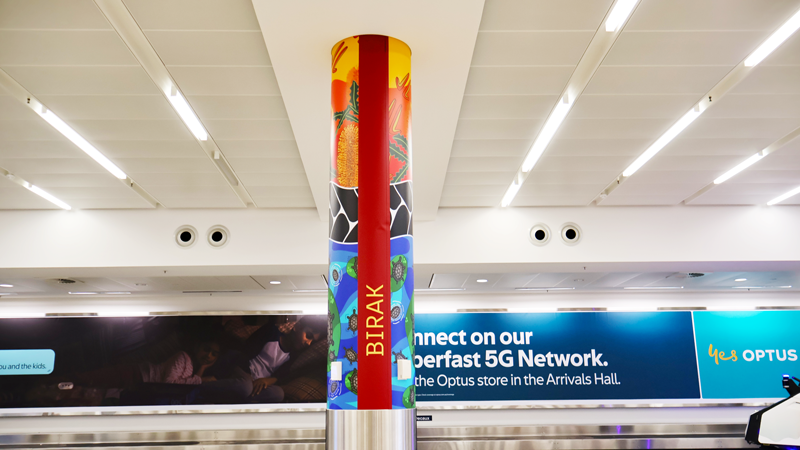
Birak marks the beginning of the hot, dry period. With rising temperatures and little rainfall, it’s a time shaped by heat, fire and movement across Country, as plants and animals adapt to the changing conditions.
"Starting in December, all through the hot months. It was the time when the old fulla used to do burning off. To keep their site safe from uncontrollable fires. It’s also the time of year the baby turtle (yugarn) would find their independence and leave the mothers nest. Little wildlife would emerge and all our beautiful stunning wildflowers would come to bloom. Which the Bodney family would pick and then sell to make a quid to feed the mob." – Violet Bodney (on behalf of the Bodney Family)
Bunuru
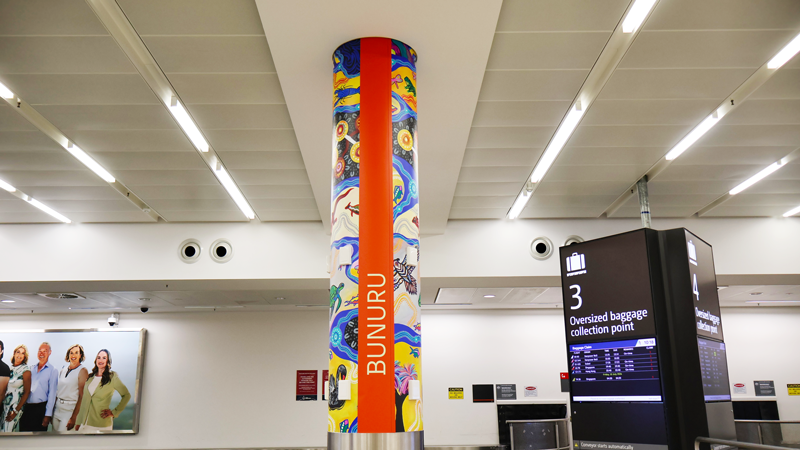
Bunuru is the hottest time of year. Long, dry days and coastal breezes define this season, with life often gathering around waterways where food and relief from the heat can be found.
Artist: Danielle Champion (on behalf of the Warrell Family)
Djeran
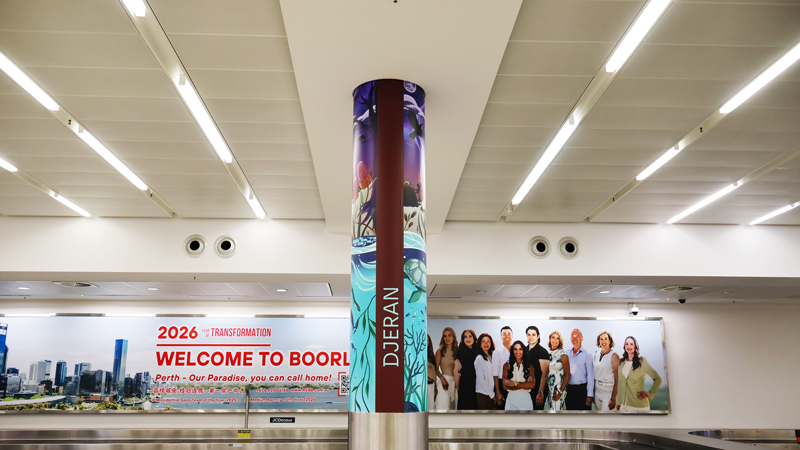
Djeran signals a shift to cooler weather. Mornings become dewy, winds soften, and the landscape begins to change as the intense heat gives way to milder conditions.
Artist: Donnathia Gentle (on behalf of the Nelson Family)
Makuru
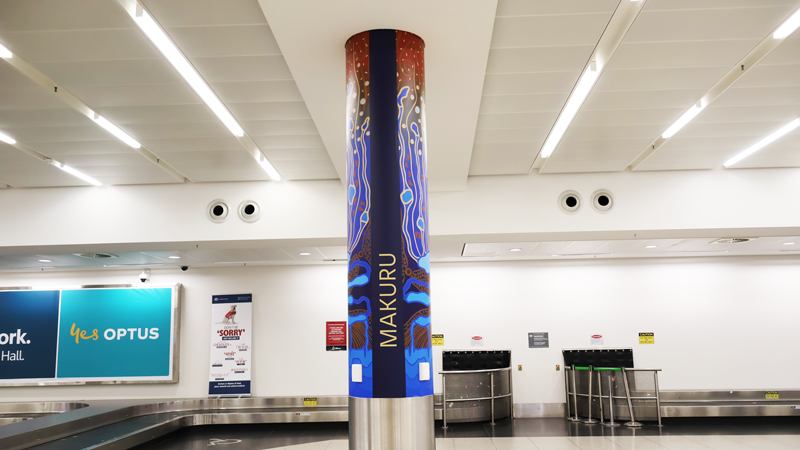
Makuru is the coldest and wettest season. Rain becomes more frequent, and the environment responds with renewed life, as waterways fill and animals move inland.
"This design focuses on the filling of our sacred waterways during Makuru. I've illustrated the water cycle from evaporation through to filtration through Country (Boodjar) and back into the ocean." – Jade Dolman (on behalf of the Jacobs Family)
Djilba
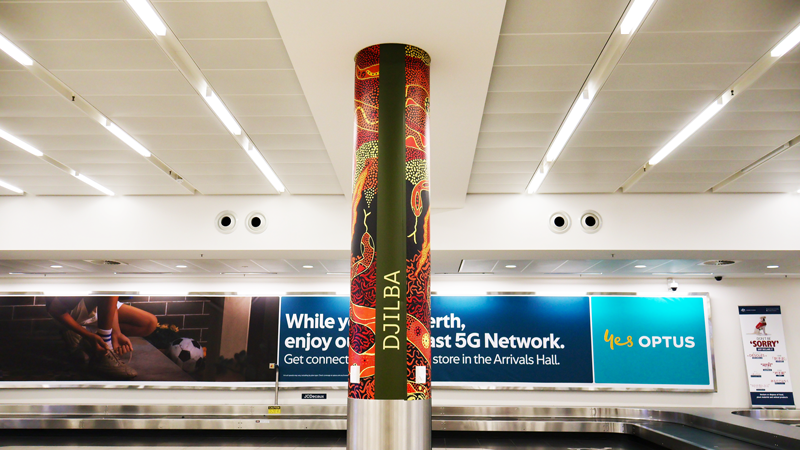
Djilba is a time of transition, bringing a mix of cold, clear days and occasional rain. It is often seen as a season of growth, with new plant life emerging and animals beginning to prepare for warmer months.
Artist: Martin McGrath Wilkes (on behalf of the Wilkes Family)
Kambarang
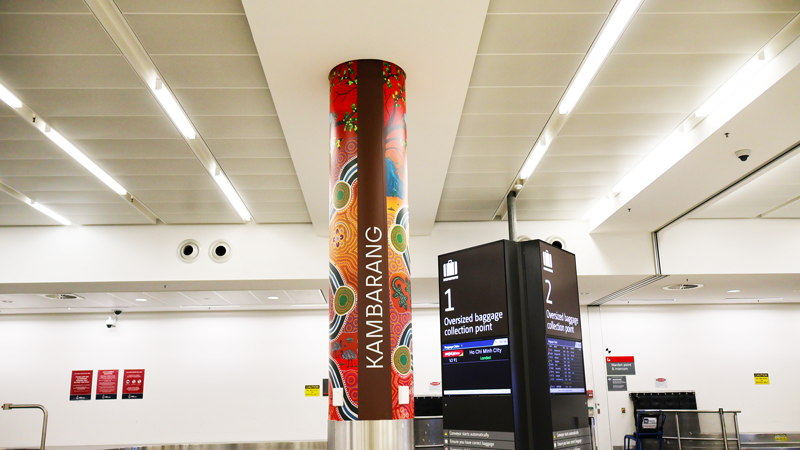
Kambarang marks the return of warmer weather. Known as a season of birth, it brings colour to the landscape with blooming wildflowers and increased animal activity.
"Kambarang is a season of birth and growth, when the bushlands bloom with new life, and the warmer weather brings wildlife into the sun. The season's traditional practice involved families transitioning to coastal areas for resources, allowing inland areas to restore.
This story is designed to be read from the bottom up, representing the cycle of life. The earthy, red tones at the bottom represent the warming land where the emu (weitj) and other wildlife begin to hatch or breed.
The winding blue lines represent the waterways that sustain life, the U shape design is symbolic of people sitting and shows how we as people have been able to share knowledge, language and cultural traditions over thousands of years.
The top section represents the sky of high spring. It shows the blooming of the Acacia saligna (coojong) tree, which indicates that winter is ending and the warmer, hotter months of summer are approaching, signalling Noongar families relocation to coastal areas for food, shelter, and other necessities. Newly hatching eggs in the branches as a symbol of the renewal that Kambarang brings to the land." – Lalita Colbung and Tameeka Colbung (on behalf of the Colbung Family)